

Starting a nonprofit organization can feel overwhelming. Many passionate individuals want to make a difference but don’t know where to begin. The process of registering a nonprofit organization in New York involves specific steps that can seem daunting. However, with the right guidance, it can be manageable and rewarding. This blog post will break down the essential steps to help anyone navigate the registration process smoothly.
- Understand what a nonprofit organization is and its benefits.
- Learn how to choose a name for your nonprofit.
- Discover the importance of appointing a board of directors.
- Find out how to draft effective bylaws.
- Get insights on filing necessary paperwork.
- Know the significance of obtaining an EIN.
- Understand compliance with state regulations.
Understanding the Basics of Nonprofit Registration
To start with, it’s crucial to grasp what nonprofit registration entails. A nonprofit organization is a group formed for a purpose other than making a profit. Instead, its primary goal is to serve the community or a specific cause. Nonprofits can focus on various areas, including education, health, arts, and social services.
Understanding the basics helps individuals recognize the commitment required to maintain such organizations. It’s not just about helping others; it also involves legal responsibilities. Proper registration ensures that the organization operates within the law and can access grants and donations effectively.
What is a Nonprofit Organization?
A nonprofit organization is defined as a legal entity that uses its surplus revenues to further its mission rather than distributing profits to shareholders. These entities are typically classified under section 501(c)(3) of the Internal Revenue Code, which allows them to operate tax-exempt.
Nonprofits can take many forms, including charities, foundations, and educational institutions. They rely heavily on donations, grants, and volunteers to achieve their goals. An example of a well-known nonprofit is the American Red Cross, which provides disaster relief and emergency assistance.
Benefits of Starting a Nonprofit
Establishing a nonprofit organization comes with numerous advantages. First and foremost, nonprofits can apply for grants and receive tax-deductible donations. This financial support can significantly boost their ability to impact the community positively.
Moreover, starting a nonprofit fosters a sense of community involvement and engagement. It allows individuals to rally around a common cause, bringing people together for a shared purpose. Additionally, nonprofits often enjoy certain legal protections and benefits, such as limited liability for members and board members.
Lastly, the work done by nonprofits can lead to fulfilling careers for those involved. Many people find great satisfaction in contributing to causes they are passionate about, creating a positive cycle of giving and support.
Step 1: Choose a Name for Your Nonprofit
Choosing the right name for a nonprofit organization is a critical first step. A well-thought-out name can convey the mission and values of the organization, making it easier to connect with potential supporters. It’s essential to select a name that is both memorable and relevant to the cause. This decision sets the tone for the organization and can impact its branding and marketing efforts.
A strong name can also help attract donors and volunteers who resonate with the mission. Therefore, taking the time to brainstorm and refine name options is vital for laying a solid foundation for the organization.
Guidelines for Naming
When naming a nonprofit, there are several key guidelines to keep in mind. First, ensure the name reflects the mission and purpose of the organization. For example, if the nonprofit focuses on environmental conservation, consider names that include words like “green,” “eco,” or “sustainability.”
Next, keep the name simple and easy to spell. Complicated names can be hard to remember and may confuse potential supporters. Additionally, avoid using jargon or acronyms that might not be familiar to the general public.
Lastly, check that the name is unique and not already in use by another organization. This uniqueness will help avoid legal issues and ensure that the nonprofit stands out in its field.
Checking Name Availability
Once a name has been chosen, it’s crucial to check its availability. Start by searching the New York Department of State’s Corporation and Business Entity Database to see if the name is already registered. This step is essential to prevent any trademark conflicts or confusion with existing organizations.
Additionally, consider checking domain name availability if you plan to create a website. A matching domain can enhance online visibility and brand consistency.
Lastly, conduct a search on social media platforms to ensure that the name isn’t already in use. Securing consistent branding across all channels is vital for establishing a strong presence.

Step 2: Appoint a Board of Directors
Appointing a board of directors is a crucial step in establishing a nonprofit organization. The board provides governance, oversight, and strategic direction for the nonprofit. It’s essential to select individuals who are passionate about the mission and bring diverse skills and experiences to the table. A strong board can enhance credibility and attract funding, as many donors look for solid leadership before committing their resources.
Moreover, the board plays a vital role in ensuring that the nonprofit adheres to legal and ethical standards. Thus, taking the time to carefully choose board members is important for the long-term success of the organization.
Requirements for Board Members
In New York, there are specific requirements for board members of a nonprofit organization. Firstly, the board must consist of at least three members who are not related by blood or marriage. This rule helps maintain independence and objectivity in decision-making.
Additionally, board members should be at least 18 years old. While there are no strict qualifications regarding professional background, it’s beneficial to have members with expertise in areas such as finance, law, or nonprofit management. Diverse perspectives can lead to more effective governance and innovative solutions to challenges the organization may face.
Responsibilities of Board Members
Board members hold significant responsibilities that are vital to the nonprofit’s success. Their primary duty is to ensure that the organization adheres to its mission and operates within the law. This includes making informed decisions about finances, policies, and programs.
Moreover, board members are responsible for fundraising and building relationships with the community. They should actively seek out opportunities to promote the organization and its mission. Additionally, it’s their duty to evaluate the performance of the executive director or CEO, ensuring that the organization is led effectively.
Overall, board members play a pivotal role in shaping the direction and impact of the nonprofit, making their involvement essential for achieving the organization’s goals.
Step 3: Draft Your Nonprofit’s Bylaws
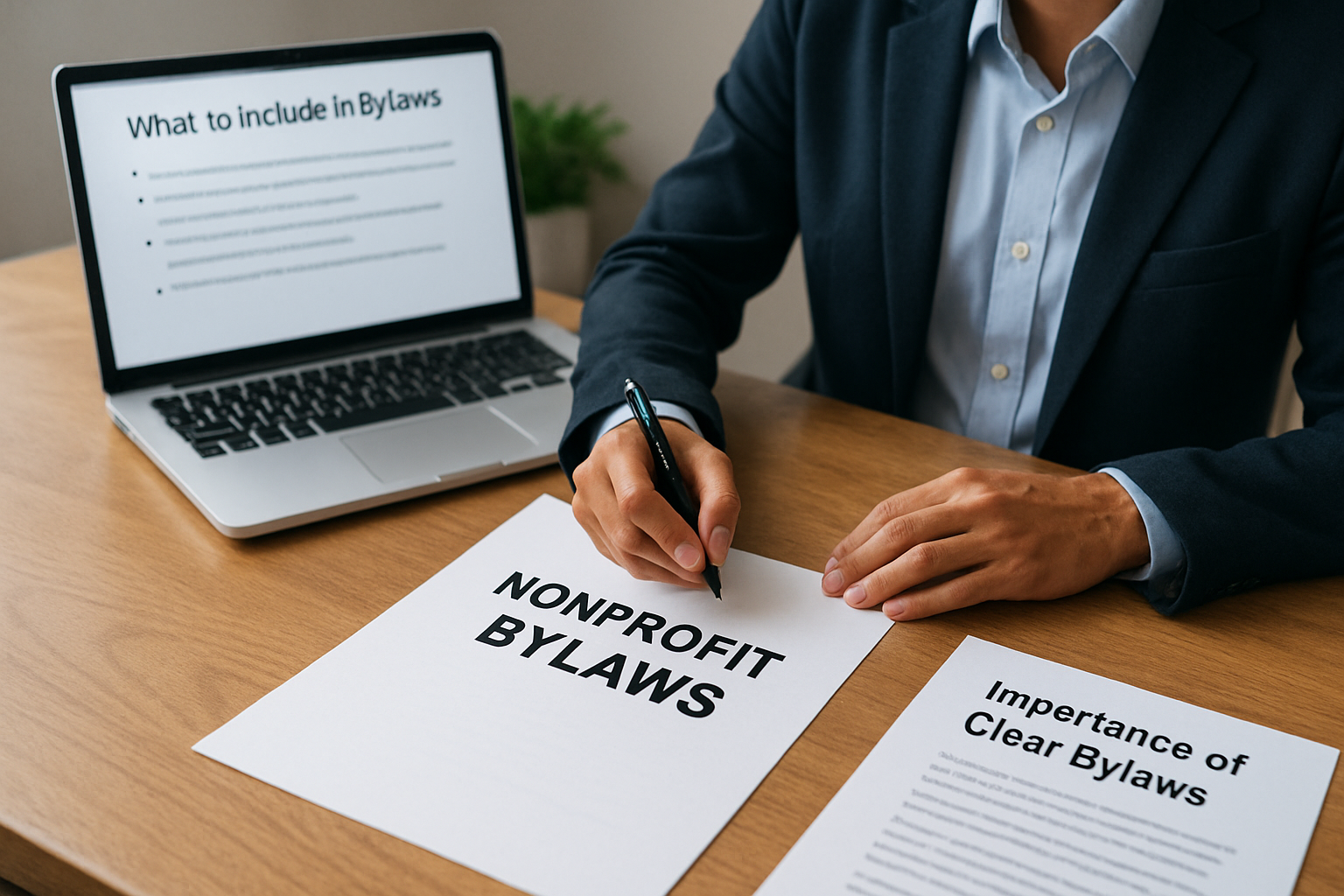
Drafting the bylaws is a vital step in establishing a nonprofit organization. Bylaws serve as the internal operating manual for the nonprofit, outlining how the organization will be governed and managed. They provide clarity on various aspects, such as board meetings, voting procedures, and member roles. Having well-defined bylaws helps ensure that everyone involved understands their responsibilities and the organization’s operational framework.
Moreover, bylaws can protect the organization by providing guidelines for decision-making and conflict resolution. This structure is essential for maintaining order and transparency, which are crucial for building trust with donors and stakeholders.
What to Include in Bylaws
When drafting bylaws, several key elements should be included. First, outline the organization’s purpose and mission statement. This section sets the tone for the bylaws and clarifies the nonprofit’s goals.
Next, include details about the board of directors, such as the number of members, their terms, and how they are elected or appointed. It’s also important to specify the frequency of board meetings and the quorum required for decision-making.
Additionally, address membership requirements if applicable, including how individuals can join, rights, and responsibilities. Lastly, establish procedures for amending the bylaws to allow for flexibility as the organization grows and evolves.
Importance of Clear Bylaws
Having clear bylaws is essential for the smooth operation of a nonprofit organization. They provide a framework for governance, ensuring that all members understand their roles and responsibilities. This clarity helps prevent misunderstandings and conflicts among board members and staff.
Moreover, well-drafted bylaws can enhance credibility with potential donors and grantors. Funders often review an organization’s bylaws to assess its governance structure and accountability measures.
Furthermore, clear bylaws can streamline decision-making processes, enabling the board to act efficiently and effectively. They serve as a reference point for resolving disputes and maintaining compliance with legal requirements.
Step 4: File the Certificate of Incorporation
Filing the Certificate of Incorporation is a crucial step in officially establishing a nonprofit organization in New York. This document is essential as it legally creates the nonprofit and allows it to operate within the state. The Certificate of Incorporation outlines key details about the organization, including its name, purpose, and structure.
Once filed and approved, the organization gains legal recognition, which is necessary for applying for tax-exempt status and receiving donations. Therefore, it’s important to ensure that the document is completed accurately to avoid any delays in the registration process.
Where to File
To file the Certificate of Incorporation, you must submit the document to the New York Department of State, Division of Corporations. The filing can be done online or by mail. If filing online, visit the New York Department of State’s website and navigate to the appropriate section for nonprofit incorporation.
If choosing to file by mail, print the completed form and send it to the address specified on the form. Make sure to keep a copy of the submitted document for your records. Timely filing is essential, as it marks the official start of your nonprofit organization’s journey.
Filing Fees and Requirements
When filing the Certificate of Incorporation, there are specific fees and requirements to consider. The standard filing fee for a nonprofit organization in New York is $75. However, additional fees may apply based on the type of nonprofit or if expedited processing is requested.
In addition to the fee, you must provide certain information in the Certificate of Incorporation, including the organization’s name, purpose, and the address of the principal office. Be prepared to include the names and addresses of the initial board members as well. Ensuring all information is accurate and complete will help facilitate a smooth filing process and avoid unnecessary delays.
Step 5: Apply for an Employer Identification Number (EIN)
Applying for an Employer Identification Number (EIN) is a necessary step for any nonprofit organization. The EIN, also known as a Federal Tax Identification Number, is used by the IRS to identify the organization for tax purposes. This unique number is essential for opening a bank account, filing taxes, and applying for tax-exempt status.
Obtaining an EIN is a straightforward process that can be completed online, and it’s free of charge. Ensuring you have this number early in the process will help streamline your organization’s operations moving forward.
How to Get an EIN
To obtain an EIN, visit the IRS website and navigate to the EIN application page. You can complete the application online, which is the fastest method. The online application is available Monday through Friday, and you will receive your EIN immediately upon completion.
If you prefer, you can also apply by mail or fax. To do this, download Form SS-4 from the IRS website, fill it out, and send it to the appropriate address listed on the form. If applying by fax, ensure that you have included all required information to avoid delays.
Why You Need an EIN
Having an EIN is crucial for several reasons. First, it is required for filing federal taxes, even if your nonprofit is tax-exempt. The EIN helps the IRS track your organization’s financial activities and ensures compliance with tax regulations.
Additionally, most banks require an EIN to open a business bank account. This account is essential for managing donations and expenses separately from personal finances.
Moreover, having an EIN allows your nonprofit to apply for grants and funding opportunities. Many grantors and donors will request your EIN as part of their due diligence process. Thus, securing an EIN early on is vital for your nonprofit’s ability to operate effectively and attract support.

Step 6: Apply for 501(c)(3) Tax-Exempt Status
Applying for 501(c)(3) tax-exempt status is a critical step for nonprofits seeking to operate without federal income tax obligations. This designation allows organizations to receive tax-deductible donations, which can significantly enhance fundraising efforts. Obtaining 501(c)(3) status also opens doors to grants and other funding opportunities that are only available to tax-exempt entities.
The application process requires careful preparation and attention to detail. Organizations must demonstrate their commitment to charitable purposes and compliance with IRS regulations. Successfully navigating this process is essential for establishing credibility and ensuring long-term sustainability.
Forms Needed for Application
To apply for 501(c)(3) status, nonprofits must complete IRS Form 1023, the Application for Recognition of Exemption. This comprehensive form requires detailed information about the organization, including its mission, programs, and financial projections.
In addition to Form 1023, organizations may also need to submit supporting documents such as the Certificate of Incorporation, bylaws, and a list of board members. If the organization has gross receipts of less than $50,000 in any of its first three years, it may be eligible to use the streamlined Form 1023-EZ, which simplifies the application process.
Carefully reviewing all forms and gathering necessary documentation before submission will help ensure a smoother application process.
Timeline for Approval
The timeline for approval of 501(c)(3) status can vary significantly. Generally, it takes the IRS between three to six months to process applications for tax-exempt status. However, delays can occur if the application is incomplete or requires additional information.
To expedite the process, ensure that all required forms are filled out accurately and thoroughly. If the IRS requests more information, respond promptly to avoid further delays.
Once approved, the organization will receive a determination letter from the IRS confirming its tax-exempt status. This letter is crucial for fundraising, as it provides proof of the organization’s eligibility to receive tax-deductible contributions.
Step 7: Comply with State and Local Regulations
Once a nonprofit organization is established and has received its 501(c)(3) status, it’s essential to comply with state and local regulations. This compliance ensures that the organization operates legally and maintains its good standing. Each state has specific requirements that nonprofits must follow, which can include obtaining additional licenses or permits.
Staying informed about these regulations is crucial for avoiding penalties and ensuring the organization can function effectively within its community. Regularly reviewing compliance requirements helps nonprofits maintain transparency and accountability, which are vital for building trust with donors and supporters.
Additional Licenses and Permits
In addition to the Certificate of Incorporation, some nonprofits may need to obtain additional licenses and permits depending on their activities. For example, if the organization plans to engage in fundraising events, it may need a charitable solicitation license from the state.
Nonprofits that operate in specific sectors, such as education or healthcare, might require specialized permits or certifications. It’s important to research the specific licenses needed based on the organization’s mission and activities. Consulting with a legal expert can help ensure that all necessary permits are secured to avoid operational disruptions.
Annual Reporting Requirements
Nonprofits in New York are required to fulfill annual reporting obligations to maintain their tax-exempt status. This often includes filing an annual return with the IRS, such as Form 990, which provides detailed information about the organization’s finances, programs, and governance.
Additionally, New York requires nonprofits to file an annual financial report with the Charities Bureau. This report helps maintain transparency and accountability to the public and ensures that the organization continues to meet state regulations.
Failure to comply with these reporting requirements can result in penalties or loss of tax-exempt status. Therefore, establishing a system for tracking deadlines and preparing necessary documents is essential for ongoing compliance and organizational health.

Conclusion
Starting a nonprofit organization can be a fulfilling journey that allows individuals to make a positive impact in their communities. By following the necessary steps, from choosing a name to complying with state regulations, aspiring nonprofit founders can lay a solid foundation for their mission. Each step plays a crucial role in ensuring that the organization operates legally and effectively.
Recap of Steps
To recap, here are the essential steps to register a nonprofit organization in New York:
- Choose a Name for Your Nonprofit: Select a name that reflects your mission and check its availability.
- Appoint a Board of Directors: Gather a diverse group of individuals who are passionate about your cause.
- Draft Your Nonprofit’s Bylaws: Create clear guidelines for governance and operations.
- File the Certificate of Incorporation: Submit the required documentation to establish your nonprofit legally.
- Apply for an Employer Identification Number (EIN): Obtain this number for tax purposes and banking.
- Apply for 501(c)(3) Tax-Exempt Status: Complete the necessary forms to secure tax-exempt status.
- Comply with State and Local Regulations: Ensure ongoing compliance with all legal requirements.
Encouragement to Start the Process
Now that you have an understanding of the steps involved, it’s time to take action! Starting a nonprofit may seem daunting, but with determination and the right resources, anyone can make a difference. Remember, every great organization started with a single step. Embrace the journey, connect with like-minded individuals, and bring your vision to life. The community needs passionate leaders like you to create positive change!
Frequently Asked Questions (FAQ)
How much does it cost to register a nonprofit in New York?
The cost to register a nonprofit organization in New York typically involves several fees. The primary fee for filing the Certificate of Incorporation is $75. Additionally, if you apply for 501(c)(3) tax-exempt status, there may be costs associated with preparing IRS Form 1023 or Form 1023-EZ. It’s essential to budget for these initial expenses as well as any potential legal fees if you seek professional assistance.
How to establish a nonprofit in New York?
To establish a nonprofit in New York, follow these key steps:
- Choose a name that reflects your mission and check its availability.
- Appoint a board of directors to provide governance and oversight.
- Draft your nonprofit’s bylaws to outline how the organization will operate.
- File the Certificate of Incorporation with the New York Department of State.
- Apply for an Employer Identification Number (EIN) from the IRS.
- Seek 501(c)(3) tax-exempt status by completing the necessary IRS forms.
- Comply with state and local regulations by obtaining any required licenses and permits.
By following these steps, you can successfully navigate the process of creating your nonprofit organization.
Can I start a nonprofit by myself?
While you can initiate the process of starting a nonprofit by yourself, New York law requires a minimum of three board members who are not related to ensure independent governance. This means you can’t run a nonprofit entirely on your own. However, you can certainly lead the effort and gather passionate individuals who share your vision to form a strong board.
Can I pay myself if I run a nonprofit?
Yes, you can pay yourself if you run a nonprofit, but there are important guidelines to follow. Nonprofit leaders, including executive directors, can receive compensation for their work, provided it’s reasonable and aligns with industry standards. It’s essential to ensure that salaries do not divert funds from the organization’s mission. Transparency in financial practices is crucial, as donors and grantors often want assurance that funds are being used effectively to further the nonprofit’s goals.
For more information on managing a nonprofit and ensuring compliance, consider exploring resources related to communication tools for nonprofits and marketing automation for nonprofits.